In the magical garden of the magical gardener, there were other plants besides daisies. There you could find roses shaped like lions, cherries with fruit which looked like women in dresses and corals, grasses with arms jumping in a circle, and many, many others.
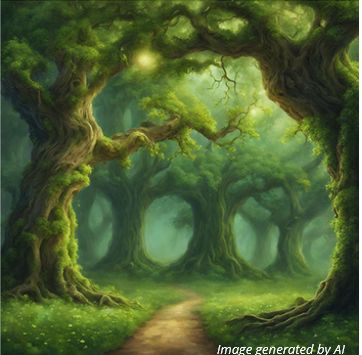
In the middle of this garden was a magical woodlet, where there were unusual oak trees that a magical gardener planted every 25 years. Those planted 50 years earlier already had bark full of dark gray hollows, while the very young ones, planted recently, had flexible twigs and smooth bark. There were also medium-sized 25-year-old trees that already had the first hollows in the rind, but still felt the flexibility of the youngest ones. They just didn’t want to play as much as the youngest ones did. How can young trees play, you ask? Well, it’s simple! The trees, like those in the magical garden, were completely unique. Their crowns resembled hats made of leaves, from under which large black eyes looked, and below them, holes carved by friendly woodpeckers were their faces and noses. They also had lithe shoulders, arms, and hands, and their nails were always leafy green. These trees also had legs, or rather many leg-roots, which were usually hidden underground. However, they could easily take them out and move around. You need to know, that the longer they stayed in place and the older the tree, the heavier and harder they became and the more tired they became with each movement.
Young seedlings had short and flexible leg-roots. As soon as they woke up in the morning, they couldn’t sit on them. They immediately jumped out of their patch of ground and ran around – to look under a stone and learn something about a magical garden, to talk to local birds and meet friends, to ask a magical stream or cave for letting them experience some adventures together.
The older ones explained all the rules of the garden to the younger ones, took them for walks to the nearby magical mountains, made sure they always got to the magical spring on time, where they refilled the water and dressed their wounds when during their up and down jumps they broke a twig or simply hugged when they needed that.
They also often visited the oldest trees together, those that the magical gardener had planted 50 years earlier. It was very difficult to pull their thick and cracked roots out of the ground. Moreover, they no longer liked changing places and wanted to stay where they liked the most. Some chose a place on a hill, others preferred to be closer to the source, and the other ones preferred to be in the greatest rays of sunlight. They had flowers, stones and animals close to them in those places they loved. However, the old trees were always very happy when the middle trees visited them with young seedlings. They loved listening to the adventures of the youngest, remembering what it was like when they played like that themselves. They also listened with tenderness to the difficulties of these middle ones, who only now understood what it meant to take care of them in the past. Sometimes all the trees would go for a walk together. The youngest ones wanted the oldest ones to go far, far away with them, and some of them, whose root-legs were still flexible, even did it. Most, however, quickly returned to their favorite standard place, where the earth accepted them with understanding, learning to immediately adapt to the shape of their old roots.
This is how the years passed, and the once young seedlings were now getting bigger and having more and more experiences. There were already a few broken twigs behind them, a few friendships made, many places discovered and countless lessons heard in the magical garden. Their leafy cap became thicker and they handled it more gently, and their eyes stopped darting from side to side so quickly because they no longer found new sights around them so often. Many things were already close and familiar to them.
Medium trees, seeing all this, followed the seedlings less and less. They were more likely to stay in the place they had chosen as their favorite. The legs stayed in one place more and more often, getting used the earth to its roots. Some of them became more and more connected with flowers, grasses and birds that made use of their shade. However, they still tried to visit the oldest trees. They watched with tenderness and concern as it became more and more difficult to move the roots, their leaves on the crown became more yellow, their eyes also became more and more difficult to open, but they still welcomed visitors with the same smile and gleam of joy.
Some medium-sized trees moved closer to the old ones for good. Around them they felt part of something bigger, they felt calm and close, some of them felt needed there. Other trees, however, chose completely different places in the garden. They were guided by where they felt peace and harmony, others went to places where they grew and flourished the most, where else to places where the company of animals and other plants suited them best. Regardless of whether they were near or far from the old trees, they all stayed where they felt they belonged.
The young ones also were visiting the same parts of the magical garden more and more often. Sometimes they were so absorbed in the place they had chosen, learning about the nature around them and getting the earth to adapt to their roots, that they forgot to visit the medium-sized and old trees.
And so time passed in the magical garden, but even there things changed. The roots of the oldest trees were getting heavier, the eyes were opening less and less with each visit, the smile, although still visible, was more and more stiff, and their bark was more and more cracked. They also recalled their lives more and more often, although sometimes they had the impression that more and more memories were slipping away.
The day finally came when the oldest trees no longer opened their eyes, no longer greeted visitors with a smile, no longer shared their love or wisdom. They just existed and stood quietly where they had placed their roots. This meant that another 25 years had passed, that a gardener would come and move and plant the old trees in a separate park. There, middle and young children will be able to visit them again and again and remember the time spent together. Sometimes they will imagine that they are having familiar conversations and that the elders are still giving them advice or comforting them when needed. Young and medium-sized trees will appreciate each of these moments (both joyful and stormy) spent together with old trees.
However, the ground where old trees have been planted so far will slowly level out, become overgrown with grass and wait until another tree likes to arrange its legs here to find safety, harmony and rest. Maybe one of the trees that previously came to this place to visit the old oak tree will decide to stay here longer, feeling that it is the best here – close to memories?